


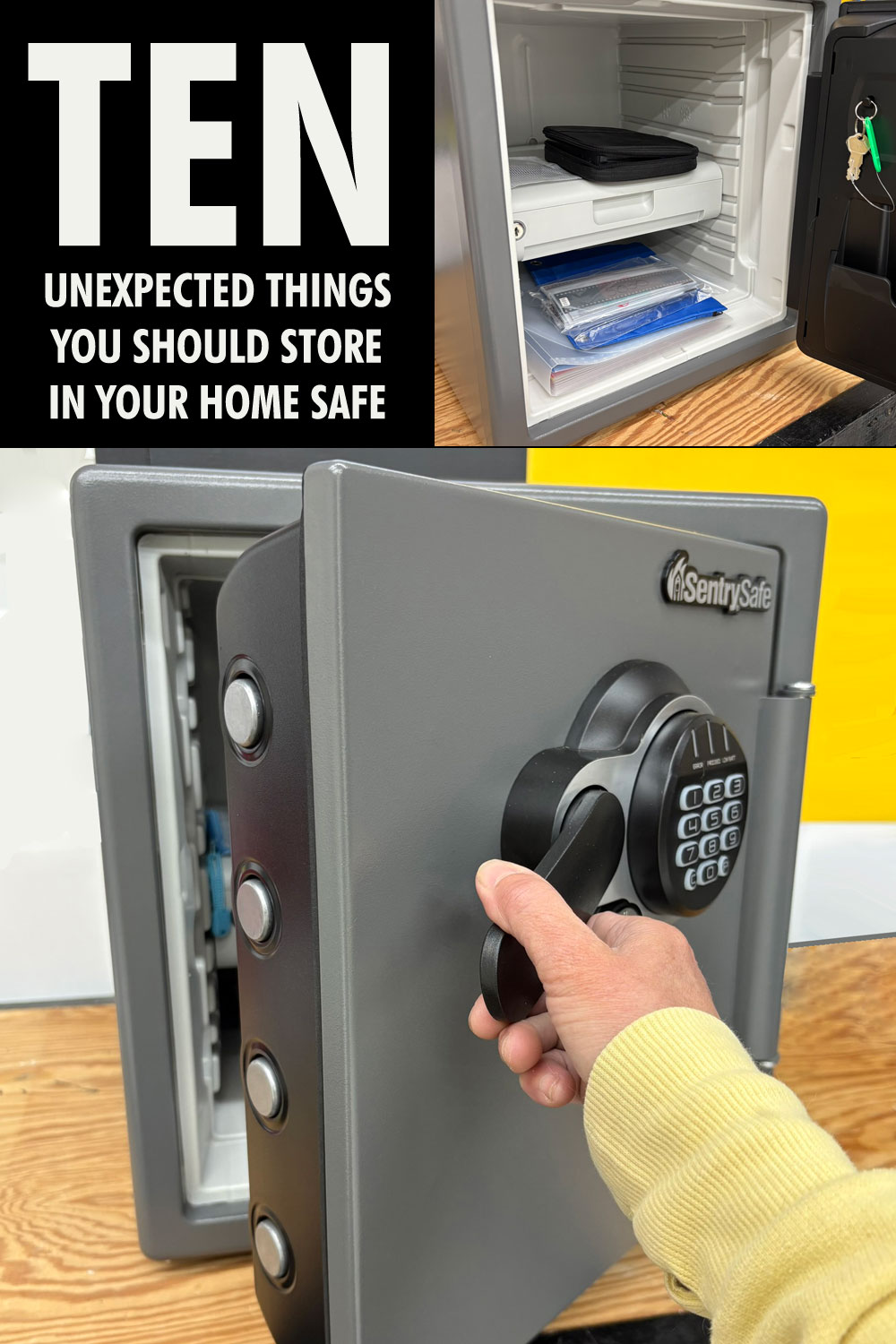
10 Unexpected Things You Should Store in Your Safe

; "Pinterest")

I try to be prepared for emergencies and also keep important documents secure. Things like wills, birth certificates, power of attorneys, car titles... there are many valuable papers that are worth protecting under a locked, fire-proof safe.
But there are other things that are important and maybe not at the top of your list... yet!
10 Things You Should Put In Your Safe
I want to share some unique ideas for things that you might not have thought of putting in your safe.
#1 - Emergency Planner
This is more than just passports and a will, this is a binder full of information that your loved ones will need if you become incapacitated. Accounts, passwords, legacy planning… all the important details about how you run your life. There are a lot of great emergency planners available, and make sure you get a thorough one. And take the time to complete it! Your family will thank you one day.
#2 – Medications
Store a couple of days' worth of your important medications. This can be life-saving if your regular bottles get lost or damaged by natural disaster, and you need meds urgently. Make sure you refresh them as needed so they don't expire.
#3 – House tour video
Walk around your house and film everything important or valuable, to document what you have for insurance purposes in case of fire, flood, or robbery. You'll hopefully never need it, but if you do you'll be so grateful to have it.
#4 – Heirloom tour video
While you've got the camera out, record a video that documents the sentimental feelings and history of your family heirlooms. Don't wait until it's too late and your kids can never find out when Grandma made that quilt or why your great uncle's cowboy hat has that hole in it.
Put both of these videos on labeled jump drives in a little zippered pouch so they don't get lost.
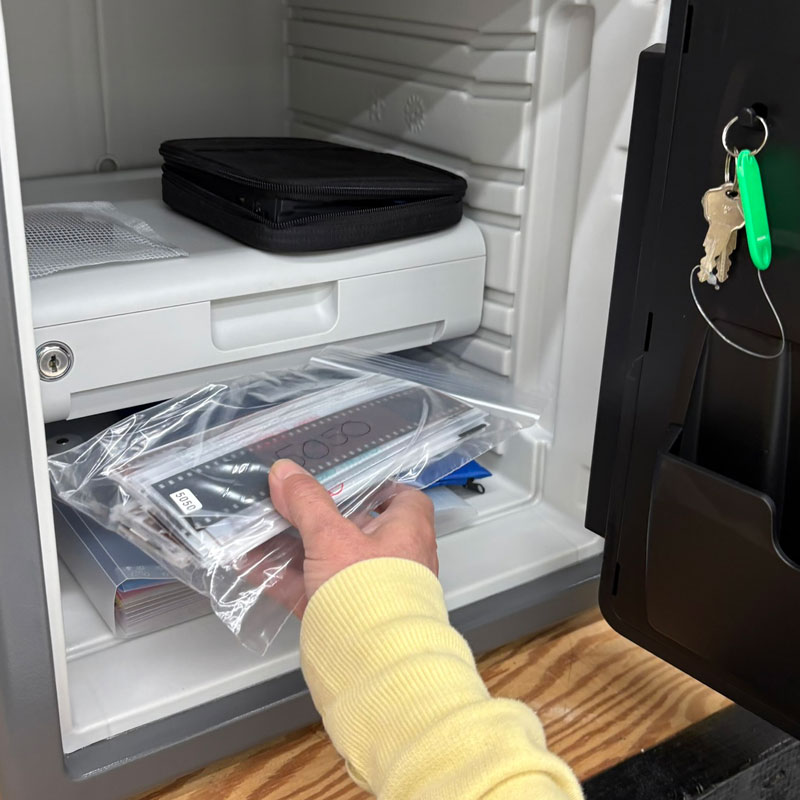
#5 – Photo negatives
If you're old enough to have a pile of photo negatives, a fire-proof and waterproof safe is a great place to store them. These memories are irreplaceable.
#6 – Computer backup
For modern memories, make a computer backup on a portable hard drive, to save all your important photos, documents, and data. Cloud backups are great, but restoring from a local copy is a lot faster if you have massive data loss and need immediate access. And be sure to update this at least every 3 months.
#7 – Extra keys
Keep an extra key for all your cars. It doesn't have to be the fancy electronic one that starts it, just a cheap one that unlocks the door. This two bucks can save you a ton in locksmith fees. Also store a key for your house and even your parents' house in case your keychain gets lost. And grab some inexpensive keychain tags to label everything for easy, quick access.
#8 – Storage unit access
If you've got a storage unit that your kids or extended family might not know about, keep an envelope with the location, unit number, and extra key or access code. If something happens to you and nobody knows you have the unit, it could end up getting auctioned off on one of those reality shows!
#9 – Phone passcode
You know you only get like 3 tries unlocking a phone before it's toast. Store the passcodes for you and your family members so that you can get into those phones in case of emergency.
#10 – Cash
We don't carry as much cash as we used to these days, so keep some on hand in case of an emergency. If there's a long-term power or technical outage, those credit cards aren't gonna work, and you need to be able to buy essentials.
Choosing a good home safe
Now that you know what to put IN your safe, you might need help choosing one. Finding the right safe to properly protect your valuables will depend on your needs and what you plan to store.
Priorities when choosing a safe:
- If you're storing mostly documents, you should prioritize fire protection
- For cash and jewelry, you should prioritize burglary resistance
- Digital media storage will require lower internal temperature ratings
- Firearms will require a secure, quick-access solution specifically designed for that use
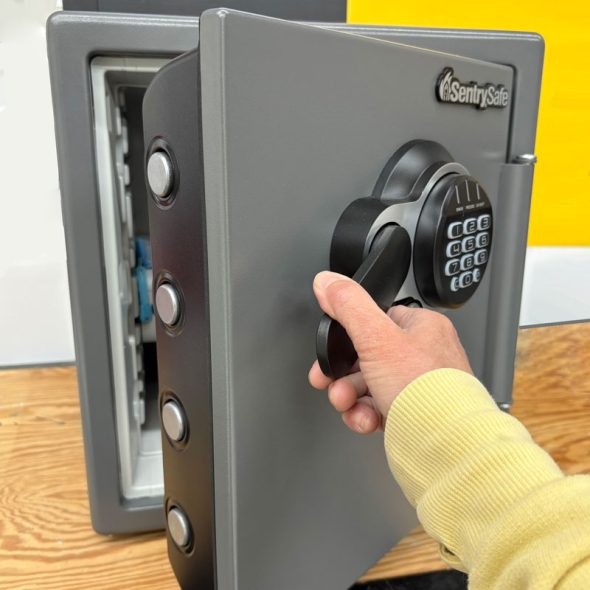
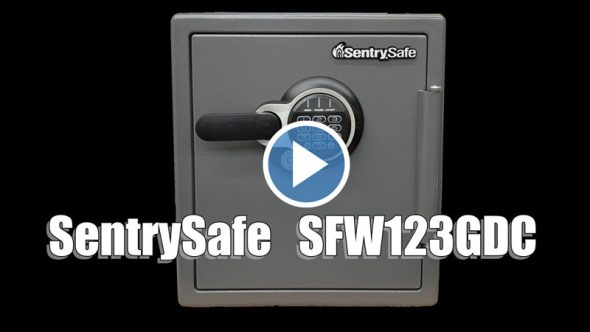
To meet my personal needs for my home safe, I chose the SentrySafe SWF123GDC (Available here on Amazon and also here at Lowe's). It's spacious, has 1-hour fireproof protection and 24-hour waterproof protection, and is equipped with an easy-to-use electronic keypad.
You can watch my full review here on our YouTube channel to see the features and how it works.
Here are 10 key factors to consider when choosing a home safe:
- Fire rating: Look for UL or ETL certified ratings. Typical ratings are 1 or 2 hours.
- Burglary/security rating: Consider material, thickness, and resistance to prying and torches.
- Size and capacity: Buy bigger than you think you'll need, because one you experience the reassurance of protecting your valuables, you'll surely find more things you want to add.
- Lock type: Choose based on how often and how quickly you need access. Electronic keypads are fast and convenient but need batteries. Mechanical dials are extremely reliable, but slower.
- Water resistance: Often overlooked, this is a critical factor to consider, not just in the case of flooding — if there's a fire, the hoses/sprinklers can destroy contents if the safe isn't water tight.
- Weight, anchoring, and installation: Safes under about 500 pounds can be carried out if not anchored. It's always best to put your safe in a hidden/discreet location as well.
- Safe type and placement strategy: Different formats offer different advantages. Floor safes are hardest to steal and very secure. Wall safes are hidden but offer less fire protection. Freestanding safes are flexible but must be anchored.
- Build quality: Look for solid steel construction (not thin sheet metal) and recessed doors with strong hinges. Stick with reputable brands.
- Trade-off: fire vs theft protection: Fire safes have insulation, making them weaker against tools. Security safes are steel, making them weather against heat. Look for a hybrid, or if budget allows, choose two safes for different purposes.
similar projects
DIY Colored Glass from Dollar Store Containers
Favorite Ways to Wear, Store, and Carry Disney Trading Pins
Redo Dollar Store Christmas Ornaments


 info@chicaandjo.com